Before choosing an ice bath: plan how you will get in and out
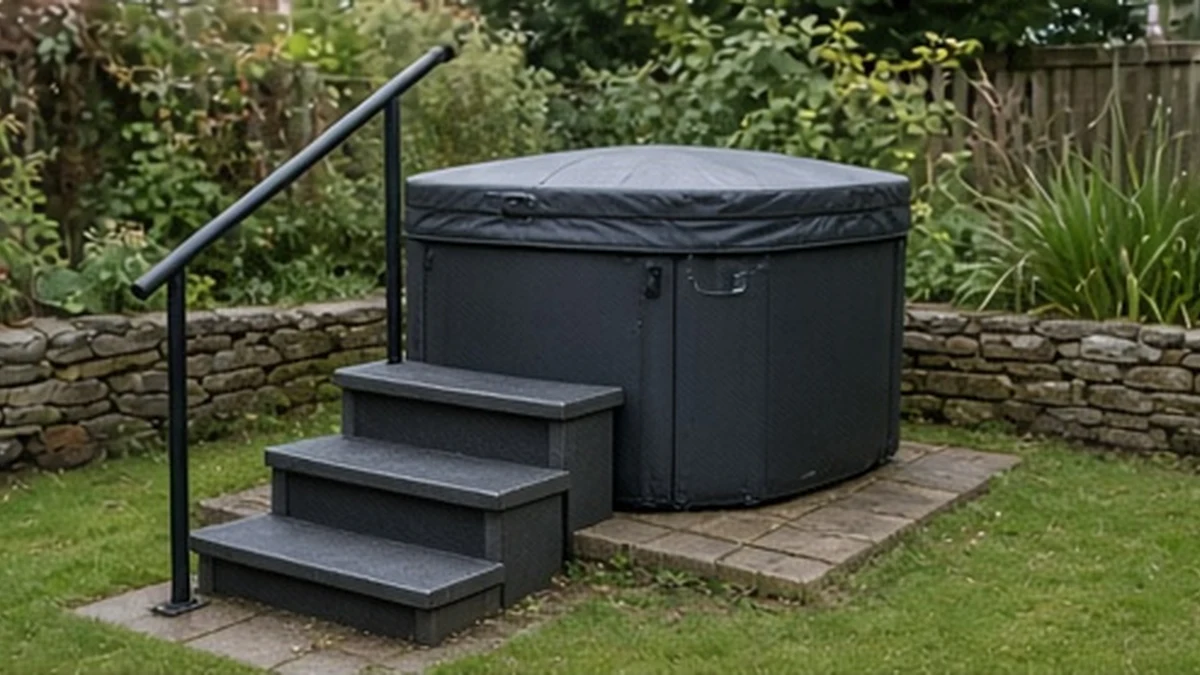
Choose the access arrangement before choosing how cold the water should be. A tub you can step into on a warm afternoon may feel very different when you are wet, cold or unsteady.
Check the route and the exit
- Is the approach level and clear?
- What stable step or handhold does the manufacturer specify?
- Can you leave without climbing over loose objects?
- Where will dry clothes and a towel be kept?
- Can another adult stay nearby and help if something goes wrong?
These are planning questions, not a certification that a particular setup is safe. Ask the supplier about the full tub weight and base requirements. Get suitable professional advice where the ground or support is uncertain.
A home tub does not remove cold shock
The RNLI warns that water at 15°C and below can seriously affect breathing and movement. It explains the involuntary gasp and increased strain on the heart associated with cold-water shock. Its water-safety advice is not a clinical protocol for a home ice bath.
Do not treat a low temperature or long immersion as a target. We do not prescribe a duration, temperature or therapeutic result. If your health, medication or pregnancy raises a question, seek individual clinical advice before use. Avoid using the tub alone.
Plan the ordinary maintenance too
Ask how to secure the cover, keep access controlled and follow the manufacturer's cleaning instructions. A covered photograph does not prove a cover is child-resistant. Keep children and pets away from the setup.
Read space, drainage and electrics before ordering. The right tub type still needs a workable base, drainage plan and safe electrical arrangement where powered equipment is involved. This guide publishes no product prices and does not recommend a treatment.